
If your home still runs on an old single wall steel oil tank, replacing it before it fails is one of the smartest maintenance calls you can make. This guide walks homeowners and heating contractors through the decisions that matter: when to replace, single wall vs double wall, which Roth size fits your space, indoor vs outdoor placement and what to have ready when you order.
Signs Your Old Heating Oil Tank Needs Replacing
Replace your heating oil tank if you see rust, weeping seams, damp spots or oil odors, or if the tank is decades old and you do not know its history. A slow leak is much cheaper to prevent than to clean up.
Most traditional basement tanks are steel, and steel corrodes from the inside out, so a tank can look fine and still be thinning. Watch for these warning signs:
- Rust, scaling or bubbling paint, especially on the bottom and around the seams
- Wet spots, drips or stains under the tank or around the fittings and oil line
- A heating oil smell in the basement or near an outdoor tank
- Legs that are rusted, bent or sitting on an unstable base
- A gauge that sticks, is cracked or reads wrong
- Water or sludge problems your service tech keeps finding in the filter
- Your insurer or oil supplier is asking about the age or condition of the tank
If you notice active leaking, call your oil supplier or a licensed heating contractor right away rather than waiting for a planned replacement.
Single Wall vs Double Wall Oil Tanks
A double wall oil tank puts a second, outer tank around the tank that holds the oil, so a leak in the inner tank is caught instead of reaching your floor or soil. A single wall tank has no backup if it leaks.
That built-in secondary containment is why many homeowners and contractors now choose double wall tanks for replacements, and why some insurers, oil suppliers and local authorities prefer or require them. Rules vary by location, so check with your local code official and insurance company. For a broader look at why containment matters, see our post on the importance of containment tanks.
Why Roth Double Wall Heating Oil Tanks
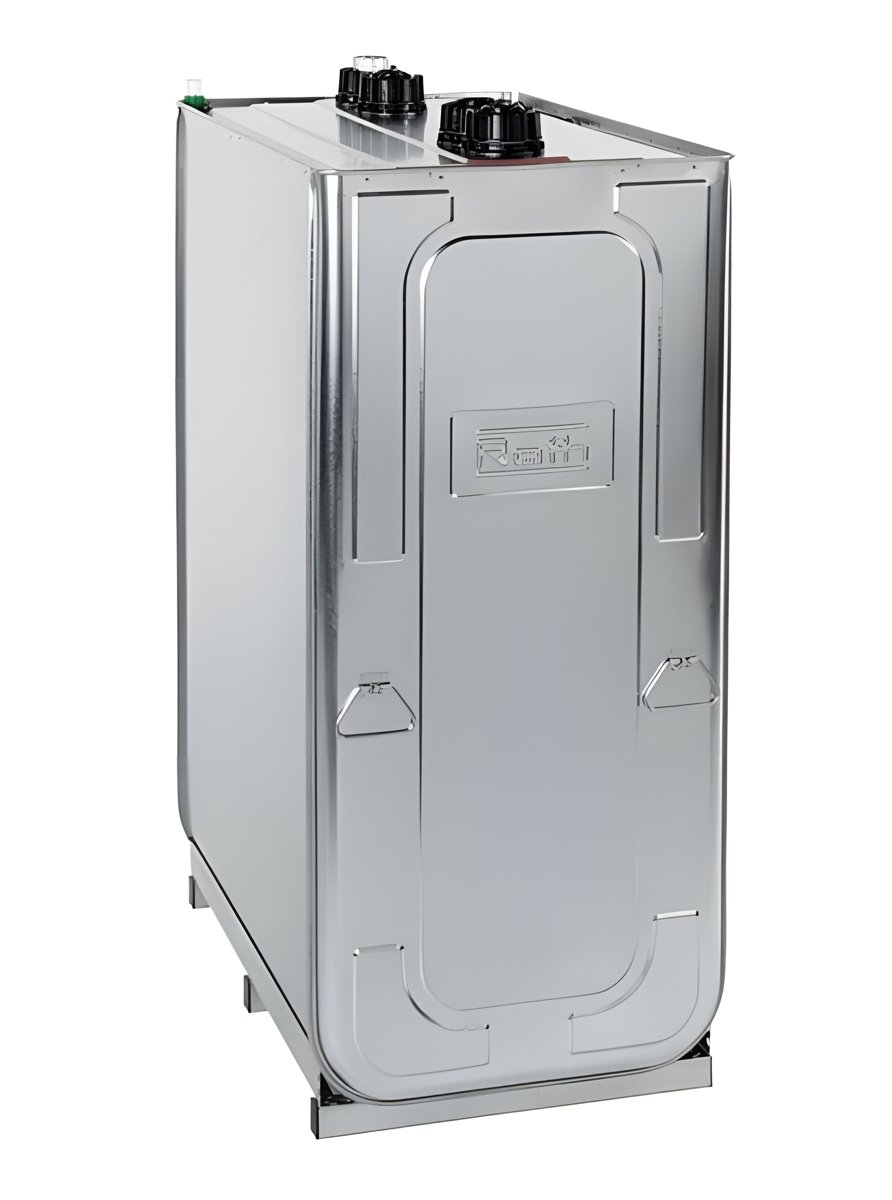
Roth double wall oil tanks pair a seamless, blow-molded high-density polyethylene inner tank with a 19 gauge galvanized steel outer tank, so the part that holds the oil cannot rust and the outer shell catches any leak. They are UL listed in the United States and Canada.
Here is what Roth and our product pages confirm about the Roth DWT design:
- Corrosion-proof inner tank: seamless high-density polyethylene holds the oil, so there are no welds or steel to rust from the inside.
- Galvanized steel outer tank: weld-free and sized to hold 110 percent of the inner tank, with sealed, rolled seams.
- Listings: UL listed in the US and Canada under SU2258, and approved under NFPA 31 and CSA B139 as non-metallic fuel oil storage tanks.
- Factory tested: both the inner and outer tanks are pressure tested at the factory and do not need further field testing.
- Leak alarm included: each tank comes with an optical leak alarm and four 2 inch NPT openings on top.
- Lighter to move: up to 50 percent lighter than a 12 gauge steel tank, which makes basement installs easier.
- Warranty: Roth backs the tank with a 30 year limited warranty against leaks caused by defects, with added labor and property damage coverage during the first 10 years. Read the full warranty terms for conditions, such as installing to Roth’s instructions with an approved vent alarm.
Roth tanks are rated for heating oil and diesel, and they are also used for other Class II and Class III fluids such as motor oil and ATF. You can compare every size in our Roth Double Wall Oil Tanks category.
Which Roth Tank Size Do You Need?
Most homes replacing a standard 275 gallon steel tank go with the Roth 275 gallon tank, or the low profile 275 if headroom is tight. Smaller homes or tight spaces can use the 110 or 165 gallon tanks, and the 400 gallon tank suits higher use.
Roth makes five models. Dimensions below are from our product pages (length x width x height) and include the empty weight:
- Roth 110 gallon (DWT110): 29 in L x 28 in W x 48 in H, 110 lbs
- Roth 165 gallon (DWT165): 29 in L x 28 in W x 65 in H, 135 lbs
- Roth 275 gallon (DWT275): 43 in L x 28 in W x 65 in H, 170 lbs
- Roth 275 gallon low profile (DWT275LH): 51 in L x 30 in W x 58 in H, 180 lbs
- Roth 400 gallon (DWT400): 64 in L x 30 in W x 72 in H, 335 lbs
Standard 275 vs low profile 275
Both hold 275 gallons. The standard model is 65 inches tall with a smaller footprint, while the low profile model is 58 inches tall but longer and slightly wider. Pick the low profile when ceiling height or overhead piping is the limit. Roth’s manual also recommends about 2 feet of clearance above the tank so the leak detector can be removed if needed.
Can you combine Roth tanks?
Yes. Roth expansion kits let multiple tanks of the same model sit side by side or end to end, filling from one fill pipe and venting through one vent. Roth notes that expansion kits are for indoor installations only.
This is handy when a single large tank will not fit down the stairs, or when you want more capacity than one tank gives. Roth’s installation manual notes that NFPA 31 limits combined indoor capacity in a non-dedicated room to 1,375 gallons, and CSA B139 sets its own limit in Canada. Local codes may be stricter, so your installer should confirm what is allowed.
Indoor vs Outdoor Installation
Roth DWT tanks are designed for both indoor and outdoor use. Outdoor installs need the Roth tank cover, and indoor tanks must not have their plastic parts exposed to direct sunlight.
Keep these points in mind for either location:
- Level, solid base: the tank needs a flat, level, stable surface with full support under the base. Roth says masonry blocks or pavers are not acceptable supports.
- Clearance: leave at least 2 inches from walls and obstructions, because the sides expand slightly when full and you need room to inspect.
- Dry location: keep it away from heat sources, standing water, water softener discharge and corrosive fumes.
- Outdoors: Roth calls for a prepared, well-drained base and the required weather cover, which adds height and needs extra room above to open. Local codes often have specific rules for outdoor fuel tanks.
- Weight: a full 275 gallon tank weighs close to a ton, so the floor or pad has to carry it.
Will a Roth Tank Fit Through Your Door?
Measure every door, stairway, hallway and turn on the way to the tank location before you order. Roth tanks cannot be taken apart to fit, and trying to do so voids the warranty.
The 110, 165 and standard 275 gallon models are 28 inches wide, and the low profile 275 and the 400 are 30 inches wide. Compare those widths, plus the height of the tank on its side if it has to be tilted, against your narrowest opening and any tight stair turn. If a single tank will not make it, two smaller tanks joined with an expansion kit are often the answer.
Installation, Code and Insurance Basics
Have a licensed, qualified installer put in your new tank, and check local fire and building codes and your insurance requirements first. Rules for fuel oil tanks differ by state, province and town.
In general, a replacement involves:
- Checking local permit requirements and any setback rules for fuel oil tanks
- Removing and properly disposing of the old tank and any remaining oil and sludge
- Setting the new tank on its base, plumb and level, with the label visible
- Connecting fill and vent piping, the oil supply line, gauge and an approved vent alarm
- Inspecting during the first fill to confirm there are no leaks
Roth’s installation manual covers these steps in detail, and your installer should follow it closely, because installing to Roth’s instructions is a condition of the warranty. It is also a good idea to tell your insurance company and oil supplier when the new tank is in.
What to Have Ready When You Order
Before you order, know your space measurements, your current tank size, whether the tank goes indoors or outdoors, and who is installing it. That makes it easy to pick the right model and accessories the first time.
- Measurements of the install spot: length, width and ceiling height
- The narrowest door, stair and turn on the path to that spot
- Indoor or outdoor location, and whether you need the outdoor cover
- How much oil you use per season and how often you want deliveries
- Whether you want one tank or multiple tanks with an expansion kit
- Accessories such as an oil level gauge or lockable fill cap with vent
- Your installer’s input on local code and fittings
Shop Roth Double Wall Oil Tanks
Ready to replace your old tank? Browse all sizes in our Roth Double Wall Oil Tanks category, or go straight to the size most homes replace with, the Roth 275 gallon double wall oil tank. Need more capacity? See the Roth 400 gallon tank. If you have questions about sizes, fit or accessories, contact the TankAndBarrel.com team and we will help you choose.